
SHARE
HOME
/ ABOUT
/ NEWS
/ Minister Lam Thi Phuong Thanh: Creating National-Stature, Distinctly Vietnamese Cultural, Artistic, and Exhibition Events with International Competitiveness
20.05.2026
Minister Lam Thi Phuong Thanh: Creating National-Stature, Distinctly Vietnamese Cultural, Artistic, and Exhibition Events with International Competitiveness
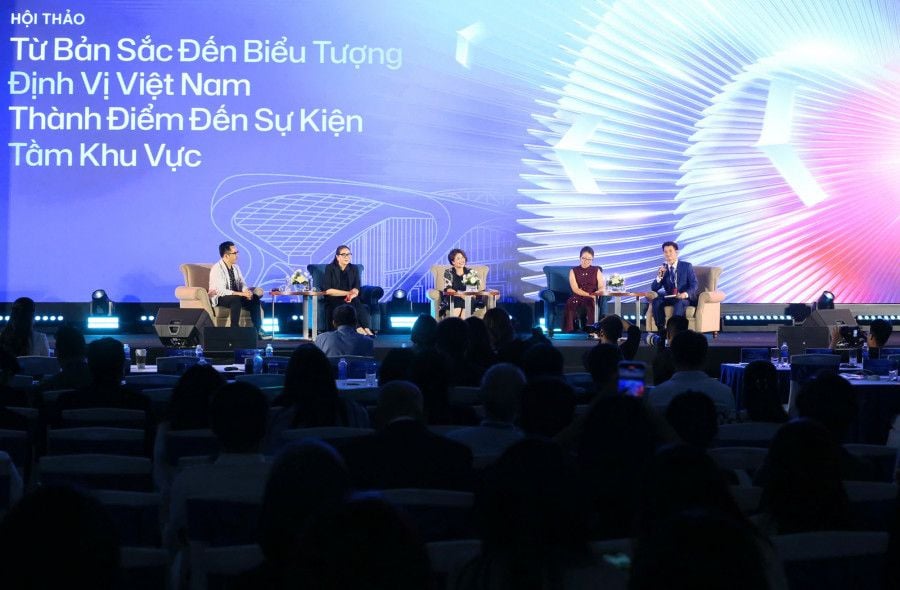
Under the strategic theme "The Era of Ascendance for Cultural Industries and the Sports Economy - From Connection to World-Class Experience," the Vietnam Exhibition, Event and Advertising Connect Summit 2026 (VEEACS 2026) was positioned as the industry’s most critical macro-forum of the year.
Speaking at the summit, the Minister of Culture, Sports and Tourism, Lam Thi Phuong Thanh, affirmed that culture is not only the spiritual foundation of society but is increasingly asserting its role as an endogenous resource, a driving force for development, and the nation's soft power. Developing cultural industries into a key economic sector not only generates economic value but also promotes and disseminates Vietnam's historical, cultural, and human values, while elevating the national standing and brand on the international stage.
Sharing major orientations and conveying high expectations for the business community—the force directly involved in forging a modern, dynamic, and identity-rich Vietnamese cultural industry ecosystem—Minister Lam Thi Phuong Thanh emphasized two core contents.
First, culture has been identified as a strategic national development resource backed by breakthrough institutional orientations.
On January 7, 2026, the Politburo issued Resolution No. 80 on the development of Vietnamese culture, reaffirming a consistent viewpoint: culture must be placed on an equal footing with politics, economics, and society. Notably, for the first time, cultural industries have been designated as a strategic economic sector, with targets to contribute approximately 7% of GDP by 2030, around 9% of GDP by 2045, and to maintain an average annual growth rate of about 10% during the 2026–2030 period.
Following this, the 16th National Assembly, at its first session, passed Resolution No. 28 on the development of Vietnamese culture with two major objectives: removing bottlenecks in mechanisms and policies, and vigorously unlocking and mobilizing social resources, particularly from the private sector, for cultural development.
Numerous critical mechanisms and policies have been enacted, including: ensuring that annual expenditure on culture accounts for a minimum of 2% of the total state budget expenditure and increases progressively in line with development requirements; forming creative industry clusters and cultural creative complexes with special incentives regarding land and infrastructure; applying preferential tax policies to several cultural industry sectors such as cinema, performing arts, exhibitions, and sports; establishing a Venture Capital Fund for Culture and the Arts; and officially designating November 24 annually as "Vietnam Culture Day."
"The Government is currently actively concretizing and guiding the implementation of these mechanisms. These represent critical shifts in developmental mindset, creating a foundation for Vietnam's cultural industries to achieve breakthroughs in the coming period," Minister Lam Thi Phuong Thanh added.
Second, the Party and the State recognize the private sector as an important driving force for cultural industries and pledge to accompany enterprises on this developmental journey.
According to the Minister, the Strategy for the Development of Vietnam's Cultural Industries to 2030, with a vision to 2045, has identified 12 key cultural industry sectors. These sectors generate value based on the convergence of culture, creativity, technology, and intellectual property rights, meeting the public's rising demand for cultural enjoyment and aligning with international integration trends.
"Recently, we have witnessed positive transformations within the Vietnamese cultural industry business community across sectors such as cinema, music, performing arts, design, advertising, and cultural tourism. In every sector, the spirit of innovation, the desire to venture, and the strong capacity for integration of Vietnamese enterprises are clearly visible.
In particular, the exhibition, event, and advertising industries are progressively asserting their roles as vital links in the cultural industry value chain, contributing to market connectivity, fostering creativity, promoting the national image, and driving the development of various other economic sectors.
Government regulatory bodies are also actively collaborating with the business community to invest in and develop a modern, regional-scale cultural industry infrastructure. Many large-scale cultural institutions have been and are being formed, such as the Ho Guom Opera House, the Vietnam Exhibition Center, alongside various local cultural creative complexes," the Minister stated.
She also confirmed that the Ministry of Culture, Sports and Tourism is currently collaborating with ministries, agencies, and localities to implement the National Target Program on Cultural Development for the 2025–2035 period, aiming to provide robust support for cultural industry sectors and the creative community.
Key tasks to translate policies into practice
To ensure these major guidelines and policies effectively materialize, Minister Lam Thi Phuong Thanh emphasized the need to focus on the drastic and synchronous implementation of several core tasks:
1. Creating cultural, artistic, and exhibition events of national stature and distinct Vietnamese identity that possess international competitiveness. Vietnam must proactively attract and enhance its capacity to host major regional and international events.
"I expect the business community to cooperate closely with competent authorities to soon formulate a portfolio of key national events to concentrate investments, implement methodical, professional promotional campaigns, and ensure professional execution.
Enterprises, particularly event and exhibition organizers, investors, and sponsors, need to proactively strengthen connections with international partners and world-class event brands. They should boldly propose cooperative initiatives to attract prestigious international events to Vietnam and stand ready to accompany the Government in diplomatic activities aimed at national promotion," the Minister stressed.
2. Bridging the gap between policy and practice. According to the Minister, National Assembly Resolution No. 28 has opened up many favorable mechanisms, but the ultimate effectiveness depends on practical implementation. The Ministry of Culture, Sports and Tourism will continue to work closely with ministries, sectors, and localities to advise the Government on swiftly bringing preferential policies regarding taxes, land, and administrative procedures into life, creating the most favorable conditions for businesses.
Recently, the Government has been drastically directing administrative reforms, cutting business conditions, and reducing unnecessary red tape. The goal is to enable enterprises to access policies faster, more conveniently, and more effectively.
"We also hope the business community will continue to accompany government regulatory bodies in the process of building legal policies, providing timely feedback on practical difficulties and bottlenecks so that policies remain highly feasible, effective, and closely aligned with developmental demands," Minister Lam Thi Phuong Thanh expressed.
3. Enhancing creative capacity and competitiveness. "Mechanisms and policies are critical conditions, but the deciding factors remain the vision, governance capacity, and the aspiration to rise of the enterprises themselves. I hope Vietnamese cultural industry enterprises, especially in the event, exhibition, and advertising sectors, will continue to invest seriously in quality, professionalism, technology application, and the cultivation of a unique identity—aiming not only at the domestic market but also confidently conquering regional and international markets," the Minister emphasized.
Upgrading infrastructure for world-class events
At the summit, Ms. Pham Thai Ha, Executive Director of the Vietnam Exhibition Center (VEC)—the unit operating one of Southeast Asia's leading large-scale exhibition centers—delivered a presentation titled "Cultural Industries and the Sports Economy: From Experience to Growth Drivers." She noted that infrastructure systems catering to mega-events in Vietnam are currently concentrated in major cities such as Hanoi, Ho Chi Minh City, and Da Nang.
Alongside established venues such as the National Convention Center, My Dinh National Stadium, and the Hanoi Opera House, newly developed strategic infrastructure such as the Vietnam Exhibition Center, Ho Guom Opera House, PVF Stadium, and Hung Vuong Stadium will significantly contribute to attracting global events. This aligns with the objective of developing culture and sports as vital foundations to elevate citizens' quality of life, contributing to Vietnam's robust development in the new era.
During the summit, experts also discussed operational foundations, including large-scale logistics, security, and premium hospitality services. They dissected the economic equations behind "World Tours," breaking down strict standards regarding venue capacity, technical capability, and risk management. The intersection between heritage depth, real-scene arts, and brand-thinking will create events embedded with Vietnamese DNA that are fully capable of conquering the global stage.
SHARE
RELATED ARTICLES
08.06.2026

